



Hi friends,
I’m back with a new podcast episode with Andreas Endries, co-founder of the land-based project and former intentional community Alma Ohana, in Alentejo, Portugal.
Since I visited Tamera in 2024, I’ve been researching and living in different intentional communities and co-livings across Portugal and Spain. If there’s one thing I’ve learned, besides how to use a sander, it’s that it’s no easy venture. The levels of idealism, emotional courage, and intellectual audacity I’ve encountered so far are perhaps as high as the levels of burnout, disappointment and hardship.
I recently read an essay on Depth Medicine on why we aren’t ready for the village: it hit home. I started my community journey fantasizing that I’d build the next Tamera with five other friends. Two years later, I decided to take a break from the community thing for the sanity of both my nervous system and my personal finances.
One of the paradoxes I’ve noticed is that many of these projects are created driven by the desire to satisfy meta-needs like spiritual development, and end up getting stuck in more basic ones like infrastructure, food production, and, of course, money, money, money. How to build new systems standing on the shoulders of old ones is the million-bitcoin question!
I still believe these initiatives are incredibly valuable and worth pursuing. And—not but—they require incredible levels of relational maturity, patience, emotional resilience, and very down-to-earth resourcefulness. Levels, I believe, most of us (myself included) are not equipped for, not if we want to make things right.
While I was staying at Mosaic Village, a 20-hectare land-based project in Alentejo, I met Andreas, a neighbor. I heard through the Alentejo grapevine that after five years of trying to run a small community at Alma Ohana, they decided to sell the land. 88 hectares, for sale.
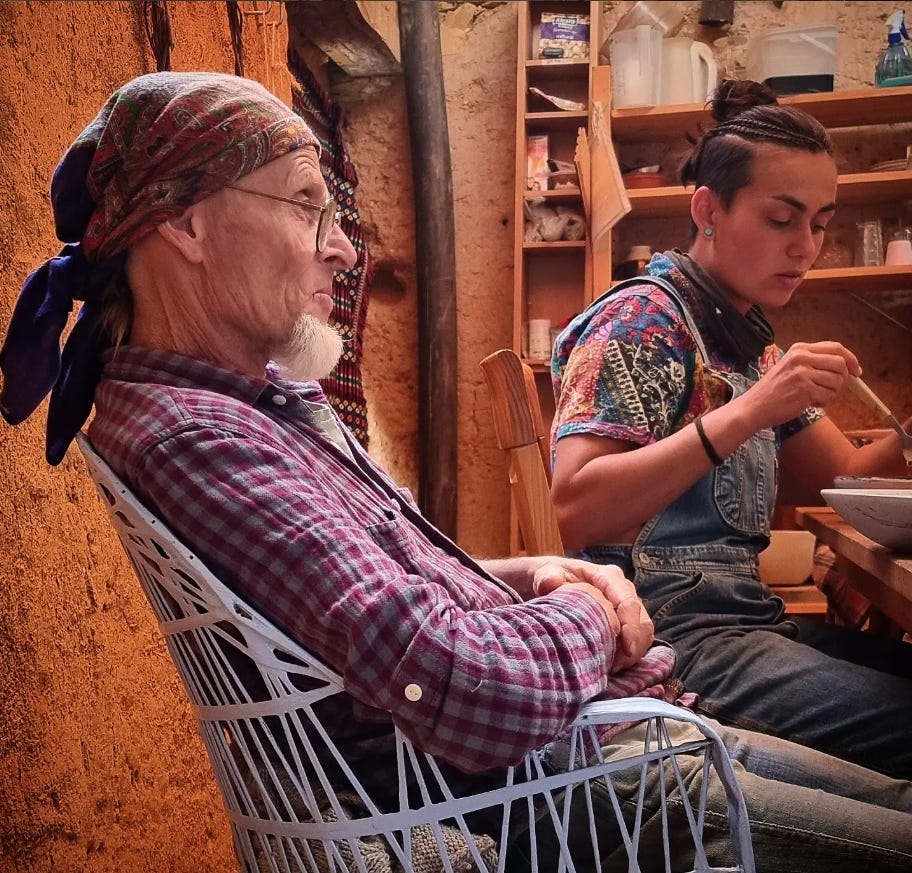
Why? The usual: the core team collapsed, one of the main investors (yes, a crypto guy) wants out, they’re stuck with plenty of land to manage and not enough people to do the work. By they I mean Andreas and their friend Antonia, both co-founders of the project. Both doers, farmers, builders. Both, in their sixties.
I think it’s as important, if not more, to talk about failures as it is to talk about successes. I wanted to listen to Andreas’ story: learn why they decided to start a community, what went right, what went wrong, and why. We ended up conversing about a lot more, of course: Andreas experience of gender as someone who identifies as two-spirit; our skepticism towards guru culture and superficial spirituality; as well as Andreas wild-carrot-induced near-death experience which they’re still processing.
I invite you to listen to—or watch below—our conversation.
With love,
Carlota
Full Episode Intro
Outliers. Those who don’t quite fit in the mainstream. Who question the social scripts they were handed: love, the nuclear family, marriage, career, money, power. In other words, what it is we are here for, alive on this planet.
Outliers. Those who listen louder to their intuition than to convention. Who try on many roles, only to find they don’t want to be defined by any. Who make choices others don’t understand — and take responsibility for their consequences.
Outliers. Those who take upon themselves to research new ways of living. Who build things from scratch. Who gather people around a vision and say: what if we tried? Those also who fail, who keep showing up, who fail better, again and again.
Some of these outliers, like my guest today, Andreas Endries, start intentional communities. Land-based projects that dream of restoring our relationship to nature, to ourselves, to each other.
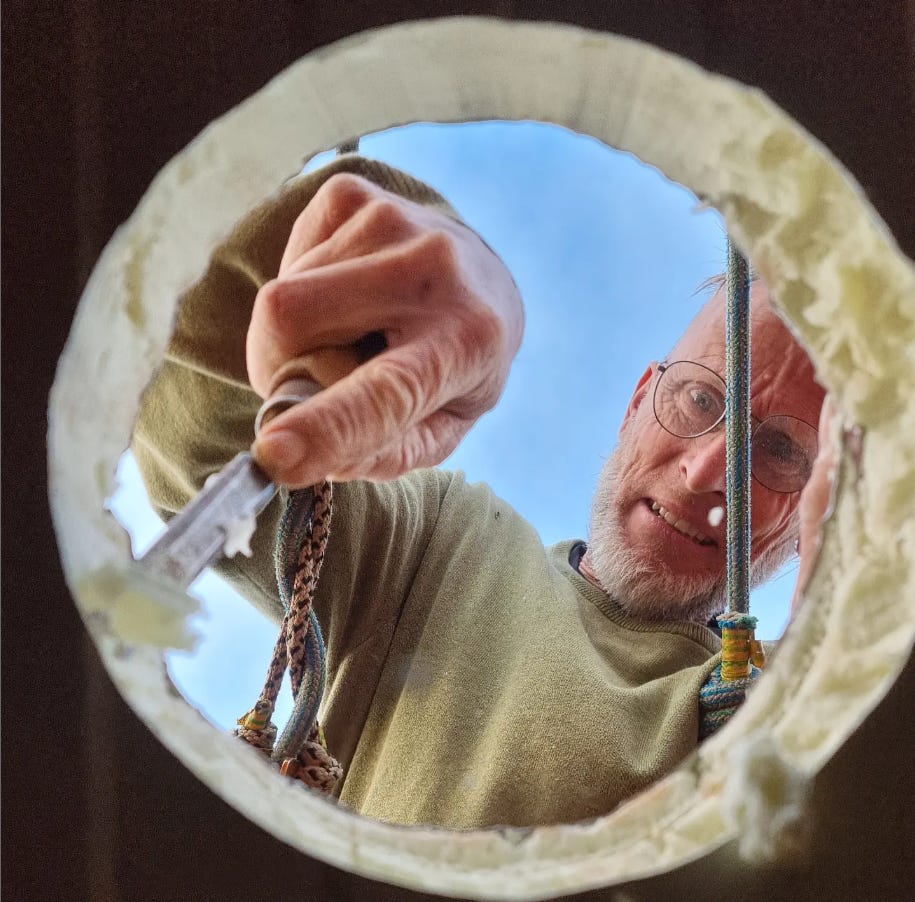
Every week, I buy the sourdough bread they bake at Alma Ohana, the 88-hectares land Andreas has been living and building on for the last five years, in Alentejo, south of Portugal.
Andreas co-founded Alma Ohana with five others, and now, as the last human standing, together with they friend Antonia, they’re selling the land.
I invited Andreas because I’ve been attempting (and failing) to build community myself. I wanted to listen to their story; learn why Andreas’ dream didn’t materialize: what broke, why it broke, and what they’d do differently.
Together we talk about Andreas' roots: how a boy who didn’t fit in ended up dedicating their life to building belonging for others. We talk about Andreas’ experience of gender as someone who now identifies as two-spirit. We talk about the stuff of community life: the big vision, the core group that didn’t hold, the famous building permits, the moment you realize you can’t hold it alone anymore. We end with a question: What to do next, when you’ve poured your whole self into something, and it still didn’t work?
Credits
Producer & host: Carlota Guedes
Sound editor: Ariel Saponar
Music producer: Carlos Sierra


